

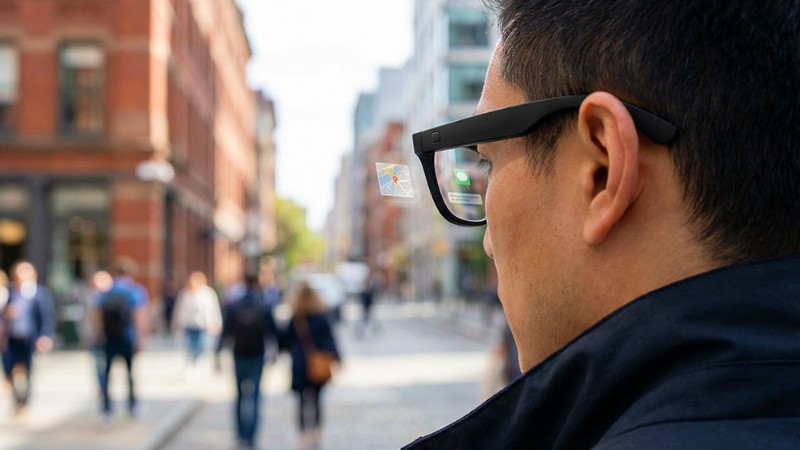
AI Glasses Shift Into Momentum Mode, Shipments Grow 322% in 2025

Forget VR headsets. AI glasses are the hot commodity in wearable tech these days.
According to market research firm Omdia, global shipments of AI glasses, like Meta’s Oakley and Ray-Ban models, increased 322% year-over-year in 2025, reaching 8.7 million units.
The surge in shipments was boosted by China, where numerous product launches, new entrants, and aggressive pricing strategies helped the country capture 10.9% of the global AI glasses market, second only to the United States.
Chinese vendors tend to design AI glasses with displays supported by a differentiated go-to-market strategy, Omdia Senior Analyst Qiran Ju said in a statement.
“The integration of displays opens new applications that resonate with consumer habits, as vendors craft products for global appeal, driving swift expansion,” he explained.
AI Glasses Enter Momentum Phase
“The category finally moved from science project to something people can actually imagine wearing in public,” declared Mark N. Vena, president and principal analyst at SmartTech Research, a technology advisory firm in Las Vegas.
He attributed the devices’ growing popularity to advances in multimodal AI, lighter designs, improved battery life, and the pull of hands-free photo, video, translation, and assistant features — turning AI glasses into a real consumer product instead of a futuristic demo.
“Omdia says shipments hit 8.7 million units in 2025, up 322% from 2024, which tells you this market has blown past curiosity and entered momentum mode,” he told TechNewsWorld.
Multimodal AI changed the game, agreed Rob Enderle, president and principal analyst at the Enderle Group, an advisory services firm in Bend, Ore. “It shifted the form factor from simple audio glasses to seeing glasses,” he told TechNewsWorld.
“Users can now ask their glasses to translate menus, identify landmarks, or summarize documents in real time,” he explained.
He also noted that the glasses are attracting content creators. “Features like high-resolution 3K video and instant social media streaming have made these a ‘must-have’ tool for digital creators,” he said.
AI glasses are also generating a different vibe among consumers than earlier smart glasses, he added. “Earlier smart glasses were bulky and socially awkward,” he explained. “Modern AI glasses, like the Ray-Ban Meta, look like standard eyewear, removing the ‘glasshole’ stigma.”
Privacy Concerns Remain High
Jennifer Kent, senior vice president and principal analyst at Parks Associates, a Dallas-based market research and consulting company specializing in consumer technology products, noted that her company’s research indicates consumers want very practical benefits from AI tools, such as translation and technical support.
“AI glasses’ ability to provide real-time translation is a benefit for travelers, non-native speakers, and those living in markets where multiple languages are spoken,” she told TechNewsWorld.
Kent added that Parks found consumers were most willing to share data in emergencies or to help them feel safe and secure. “Smart glasses could have a market for lone workers or workers in vulnerable situations to combine video capture and emergency support,” she reasoned.